
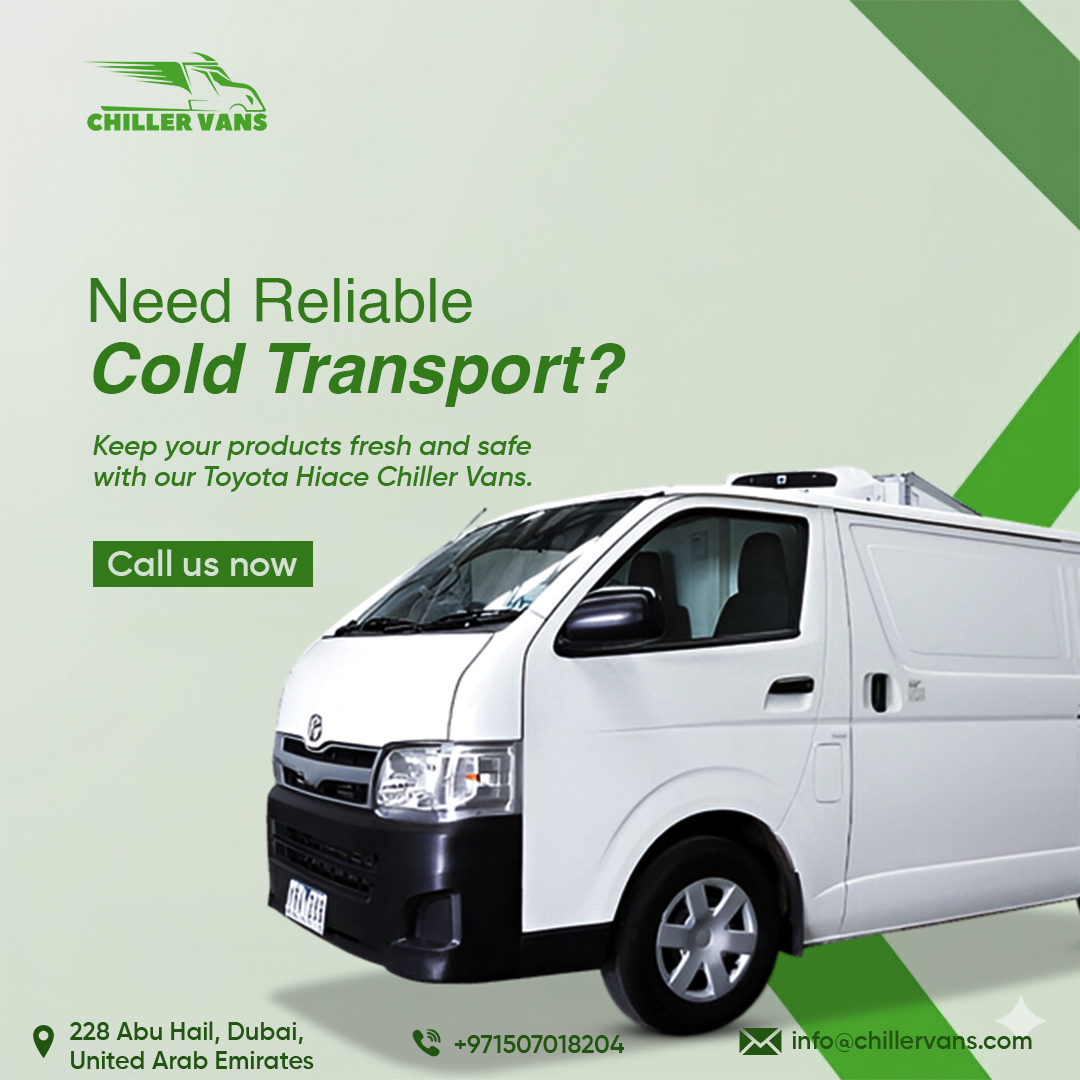
How Cold Chain Logistics is Transforming Perishable Goods Delivery
Demand for fresh, safe, high-quality products has never been higher. From food and beverages to pharmaceuticals and cosmetics, businesses depend on logistics systems that protect product integrity from the warehouse to the customer's door. Cold chain logistics is what makes that possible and in a market like Dubai, it is the difference between a delivery and a write-off.
What is Cold Chain Logistics?
Cold chain logistics is the transport and storage of goods under controlled temperature conditions. It combines refrigerated storage, specialised packaging, and temperature-controlled vehicles into one unbroken system, holding a consistent temperature range from the point of origin to final delivery.
The word that matters is unbroken. A cold chain is only as strong as its weakest link. Perfect refrigerated storage means nothing if the goods then sit on a loading bay in the sun for twenty minutes, and a well-run route means nothing if the van was never pre-cooled before loading. Every stage has to hold.
Why Cold Chain Logistics Matters More in Dubai
The principles of cold chain are the same everywhere. The margin for error in the Gulf is not.
When the forecast says 45°C, the inside of a cargo hold parked in direct sun climbs well beyond it. Goods that would tolerate a short unrefrigerated journey in a temperate climate can be beyond saving here in minutes. That single fact reshapes everything downstream: how you load, how you route, how long a door can stay open, and what kind of refrigeration unit is actually fit for the job.
Preserving Product Freshness
Fruit, vegetables, dairy, meat, and fish all require strict temperature control. A properly managed cold chain keeps them fresh and safe to consume not just cold on arrival, but cold at every moment in between.
Reducing Waste and Loss
Without temperature-controlled transport, spoilage becomes a running cost rather than an occasional accident. For a business moving perishables daily, the cumulative loss is usually far larger than the transport spend it was avoiding.
Ensuring Regulatory Compliance
Food and pharmaceutical transport is regulated, and the requirements are enforced. A compliant cold chain protects your customers and protects the business from the consequences of a failure.
The Key Components of an Effective Cold Chain
Temperature-Controlled Transportation
This is where most cold chains break, because it's the stage with the least control traffic, open doors, multiple stops, direct sun. Vehicles need refrigeration units genuinely rated for Gulf ambient temperatures, not units specified for European summers and hoped to cope.
Cold Storage Facilities
Warehouses and distribution centres with refrigeration hold product quality before and after transit. They're the stable ends of an unstable middle.
Monitoring and Tracking Systems
Modern cold chain logistics monitors temperature in real time so that a deviation is caught while it can still be fixed. It also produces a logged record which, for pharmaceutical clients and for anyone who audits their suppliers, is the proof that you delivered correctly. A delivery you can't evidence is a delivery you may have to argue about.
How Chiller Vans Are Transforming Delivery
The chiller van has become the backbone of the cold chain, and nowhere more visibly than Dubai.
Online grocery and rapid food delivery have compressed the timeline. Restaurants take deliveries twice a day, hotels run to fixed service times, pharmacies move temperature-sensitive medicine across the city, and florists handle stock that has to arrive alive. Every one of those journeys is short, urban, multi-stop the hardest possible conditions for holding temperature, and exactly what a chiller van is built for.
This is also why a chiller van for rent in Dubai has become such a common answer rather than an outright purchase. Demand is spiky. Ramadan, the summer peak, wedding season, and the events calendar all create surges that don't justify carrying a vehicle year-round. Renting lets a business scale into a busy six weeks without owning an asset that sits idle for the other forty-six.
What Actually Makes the Difference
Not every refrigerated vehicle performs the same job. Three distinctions separate a functioning cold chain from an expensive one:
Chiller or freezer. A chiller van holds cargo above freezing fresh produce, dairy, fresh meat, flowers, most pharmaceuticals. A freezer van holds it well below. Confusing the two is the most expensive mistake in the category: frozen goods arrive thawed, or fresh produce arrives ruined. Always specify the temperature your cargo needs, never just "a refrigerated van."
Pre-cooling. The unit should be running and the box at temperature before loading. Refrigeration maintains temperature; it does not rescue a warm load. In a Dubai summer, it may never catch up.
Airflow. Cold air has to circulate. A cargo area packed floor to ceiling creates warm pockets, and the product in those pockets spoils while the gauge beside the cooling unit reads perfectly fine.
Benefits for Businesses
- Longer shelf life and consistently better product quality
- Fewer losses to spoilage, which flows straight to the bottom line
- Stronger customer trust and in perishables, trust is repeat business
- Compliance you can evidence rather than merely claim
- The ability to scale into peak demand without buying an asset
Final Thoughts
Cold chain logistics is no longer operational support. It's a growth constraint or a growth driver, depending on how well you run it. Businesses that treat refrigerated transport as a cost to minimise tend to discover the real cost in spoiled loads and lost accounts.